GMM Non-Stick Coating

Automotive

GMM Non-Stick Coating Overview

GMM Nonstick Coatings is an ISO 9001 certified global supplier of non-stick coatings to the cookware, bakeware, and electrical appliance industries.

GMM has decades of experience supplying the highest quality custom-made non-stick systems to our clients around the world. Each day, over 40 million Americans use GMM nonstick coatings in their kitchens when they cook.

The management and staff of GMM have been working in the Housewares market for many years, and understand the important role that our nonstick coatings play in the industry. We love coming up with ideas that can help our clients grow. GMM will custom build a coating material to meet the needs of any application that you have. Besides cookware, bakeware, and electrics, we have designed nonstick coatings for everything from copper garlic presses to paper pizza boards. GMM’s nonstick coatings are as good or (in most cases) better than any other nonstick coating in the world. This fact has been confirmed in outside independent tests as well as in a multitude of internal tests.

GMM’s products are designed to be applied under standard cure schedules and application equipment. Your OEM factory will have no issues in switching to GMM material, and will find no mysteries in getting used to our products whatsoever.

Houseware Coating
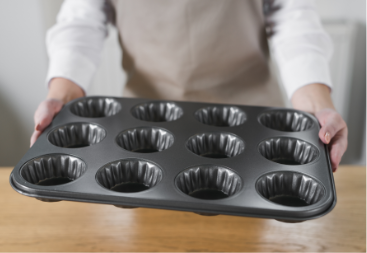
Duramax (3-Coat)

The highest quality 3-coat nonstick system that GMM offers. DURAMAX transcends typical “internal reinforcing” technology by using nanotechnology to atomically harden the resins that are typically the weak links in the coating system. This breakthrough has given GMM an order of magnitude increases in coating durability, and is the reason that the highest quality cookware companies globally are using DURAMAX.

Read more

Duraslate (2-Coat)

The highest quality 2-coat nonstick system that GMM offers. DURASLATE is internally reinforced in a very special manner, using “matrix technology”.

Read more

Duraceram (2-Coat Ceramic)

A cutting edge 2-coat ceramic coating that is totally free of PTFE, and has unparalleled durability and abrasion resistance. Unlike other ceramic coatings, DURACERAM has food release capabilities that go beyond “easy clean.” DURACERAM is perfect for applications where there is a high need for temperature resistance such as griddles, woks, iron sole plates, cookware, and curling irons.

DURACERAM reaches a previously-unheard of pencil hardness of 8-9H, while still maintaining excellent heat resistance properties and moderate nonstick properties.

DURACERAM can be applied on various metal substrates with light grit blasting, and its low baking temperature provides great energy and cost savings.

DURACERAM meets the FDA standard 21CFR 175-300 as well as all ROHS standards, and is available in breathtaking color options.

Read more

Marrlex (For Roller Coating)

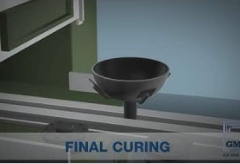
Roller Coating is a process that involves coating aluminum discs with a specially designed machine that virtually eliminates coating loss. These coated circles will be pressed into cookware, in a process known as “deep drawing.”

Read more

Ceram-X (Silicone-Ceramic Hybrid)

The highest quality “hybrid” ceramic coating that GMM offers for bakeware, and is being used by many of the leading global manufacturers. It offers unparalleled scratch resistance (5-6H pencil hardness) and Unparalleled heat resistance (over 650°F)

Read more

Click to view one of the videos below:
Industrial Coating

Area of Application Coating Application Benefits Through Coatings
Self Tapping Screw Corrosion Resistance Prevent corrosion
Steering Shaft Yokes Lubrication, Corrosion Resistance Free Movement
Seat Belt Clips Corrosion Resistance, Lubrication Operator Fail-Safe
Electric Seat Adjustment Lubrication, Corrosion Resistance Smooth Operation, Long life
Solenoids Non-sticks, Lubrication Prevent Fouling
Door Hinge Pins Corrosion Resistance Prevent Corrosion
Rubber Gaskets Lubrication Better Seals
Springs Corrosion Resistance, Lubrication Prevent Corrosion,
Noise Reduction
Hose clamps Lubrication Provides Even Tightness to Hose
Steering Column
Safety Clipsids
Corrosion Resistance, Lubrication Assure Collapse in a Crash
Air-Conditioning Piston lubrication No Galling, Longer Life
Engine Head Gaskets Low COF, Heat Resistance,
Non-Stick
Low Maintenance, Allow Slip During Expansion
Piston Skirts Lubrication Less Scuff and Wear,
Increased Gas Mileage
Metal Bearing Corrosion Resistance, Lubrication Less Expensive


Low Friction Coatings

Substrate SS, Iron Steel, Cold Rolled Iron, Aluminium, etc
Pretreatment Sandblasting / Phosphating
Dry Film Thickness (DFT) 22 – 25 Micron
Baking temp. 170 – 280ºC
Color Availability Lighter Darker Colors
Heat Resistance 150 – 200ºC
Salt Spray Resistance 144 -240 Hr
Pencil Hardness 3H – 5H
  • Fasteners
  • Gasket
  • Piston & Swash Plate
  • Petrol & Gasoline Resistance
  • Bearing Cap & Cages
  • Garden Tools

High Heat Resistance Coatings

Substrate Mild steel, Cold Rolled Iron
Pretreatment Sand Blasting / Phosphating
Dry Film Thickness (DFT) 22 – 25 Micron
Baking temp. 250 – 280ºC
Color Availability Darker Colors
Heat Resistance 450 – 650ºC
  • Muffler & Silencer
  • Fasteners
  • Photocopier & Rubber Roller
  • Mould Release
  • Textile Roller
  • Industrial O Ring

Testing

We are committed to constantly developing newer tests and procedures that are increasingly “kitchen realistic” yet non-subjective and very quantifiable.

Dry Film Thickness Egg Dry Frying Beef Fry
Gloss Boiling Salt Water Staining
Adhesion Boiling Oil Burnt Milk
Pencil Hardness Boiling Acetic Acid Salt Spray
MEK Resistance* Boiling Tomato Sauce Dishwasher
Dry Abrasion Resistance Stir Fry Tiger Paw
Wet Abrasion Resistance

*MEK Resistance is conducted to check whether the coating has properly cured or not.
^Rubbing test method

Click here to view GMM coating quality test results. We are proud that our best 2 and 3 coat systems outperform any other coatings that are available in the marketplace, and the data displayed below are routinely reconfirmed by our clients.
Contact Us

General Enquiry

Opening hours:
9:00 a.m.~5:00 p.m.
(Monday to Friday)

    Product Enquiry

    <h3>I have read the <a href='/privacy-policy' target='_blank'>privacy policy</a> and agree</h3> Lorem ipsum dolor sit amet, consectetur adipiscing elit. Etiam eu turpis molestie, dictum est a, mattis tellus. Sed dignissim, metus nec fringilla accumsan, risus sem sollicitudin lacus, ut interdum tellus elit sed risus.

    ESPACER™

    Electronics

    Espacer Overview

    ESPACER™ is an aqueous solution without any organic solvent. It’s a weak acidic solution, which is applicable for both type of resist.

    A thin film of ESPACER™ is highly conductive, therefore it solves problems related to positional errors during electron-beam (EB) lithography processes.

    ESPACER™ 300Z is a Charge Dissipating Agent for Electron Beam Lithography (E-Beam) for positive tone Electron Beam Resists (e.g: ZEP520A PMMA).

    Characteristics

    • Used as a film for Electrification Dissipating Material this contains the original conducting polymer.
    • The thin film of ESPACER™ has a high conductivity; therefore, it solves the problem about the positional error on the electron-beam (EB) lithography process
    • Excellent charge dissipating effect with sheet resistance 7 x 10⁵ ohm/sq at 20 nm thickness and conductivity of 0.7 S/cm.
    • No adverse effect on resolution of resists.
    • Can be applied not only onto conventional resists but also onto chemically amplified resists.
    • There are cases where it can protect the resist as an acidic polymer film.
    • The spun film has sufficient heat resistance in practical uses
    • Water alone is used as solvent.
    • It has neither a flash point, nor an ignition point, nor flammable limits
    • Easily removed with water after exposure

    Grade List

    Non Chemical Amplified Chemical Amplified
    Positive
    Resist
    Positive
    Resist
    Negative
    Resist
    Positive
    Resist
    Negative
    Resist
    Negative
    Resist
    Espacer ZEP520 PMMA FOC-1X FEP-71 SAL601 NEB22
    300Z
    300HX02
    300AX01

    Resonac Asia Pacific Pte. Ltd. is the sole distributor of ESPACER™ for South East Asia, Oceania.
    MOQ: 100g

    Contact Us

    General Enquiry

    Opening hours:
    9:00 a.m.~5:00 p.m.
    (Monday to Friday)

      Product Enquiry

      <h3>I have read the <a href='/privacy-policy' target='_blank'>privacy policy</a> and agree</h3> Lorem ipsum dolor sit amet, consectetur adipiscing elit. Etiam eu turpis molestie, dictum est a, mattis tellus. Sed dignissim, metus nec fringilla accumsan, risus sem sollicitudin lacus, ut interdum tellus elit sed risus.

      Chloroprene

      Automotive

      Chloroprene Overview

      Resonac (formerly Showa Denko) has been manufacturing Polychloroprene for over 50 years with consistent, high-quality performance and customer satisfaction.
      Polychloroprene (or chloroprene) is used in a wide variety of applications, including but not limited to medical devices, adhesives, asphalt emulsions, coatings, general rubber parts, textiles, waterproof membranes.

      Polychloroprene offers a good balance of properties over other elastomers, such as high-elasticity, oxidation resistance, heat resistance, oil resistance, low temperature resistance, compression set, weather resistance, ozone resistance, abrasion resistance, and flame resistance. The versatile properties have long been the key to Resonac Chloroprene’s utility as a multi-purpose rubber.

      We produce solid Chloroprene (dry chips) as well, please feel free to contact us for enquiry.

      Applications

      Medical
      Surgical Glove

      Resonac Chloroprene is a high-quality aqueous dispersion of Chloroprene polymer suitable for dipping applications such as surgical glove. The wide range of gel content, and crystallization rate grades provide more flexibility to design exclusive formulations and desirable properties. Showa Denko has an accelerator free grade as well.

      Grades TSC Polarity Gel Content Crystallization
      Rate
      671A 58.0-60.0% Anionic Medium-high gel Medium-fast
      750 49.0-51.0% Anionic Medium gel Extremely slow
      753 49.0-51.0% Anionic High gel Extremely slow
      Examination Glove

      Resonac Chloroprene is a high-quality aqueous dispersion of Chloroprene polymer suitable for dipping applications such as examination glove. Chloroprene is soft and comfortable to wear for longer period compare to nitrile glove. Chloroprene also offers the advantages of natural latex without the risk of type I allergy.

      Grades TSC Polarity Gel Content Crystallization
      Rate
      671A 58.0-60.0% Anionic Medium-high gel Medium-fast
      654 58.0-60.0% Anionic Low gel Medium-fast
      750 49.0-51.0% Anionic Medium gel Extremely slow
      Construction and Coating
      Waterproof

      Resonac Chloroprene is a high-quality aqueous dispersion of Chloroprene polymer suitable for waterproof applications. Resonac Chloroprene offers advantages including excellent mechanical strength with durability, excellent chemical resistance, excellent weather/ozone resistance.

      Grades TSC Polarity Gel Content Crystallization
      Rate
      671A 58.0-60.0% Anionic Medium-high gel Medium-fast
      Road Repairing

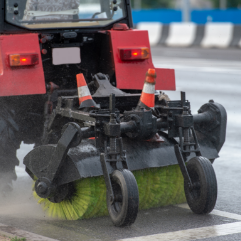
      Resonac Chloroprene is a high-quality aqueous dispersion of Chloroprene polymer suitable for roading applications. Compared with SBR or natural rubber latex, Chloroprene latex could retain more elasticity upon mixing with bitumen emulsion. Chloroprene latex also offers superior weather/ozone resistance, better water resistance, more consistent rheology, lower flammability and more mechanical resistance than halogen-free polymers such as SBR or natural rubber.

      Grades TSC Polarity Gel Content Crystallization
      Rate
      671A 58.0-60.0% Anionic Medium-high gel Medium-fast
      SND 57 57.0-59.0% Anionic Sol Medium
      115 46.5-48.5% Non-Ionic Medium gel Slow
      Water Base Adhesive
      Water Base

      Resonac Chloroprene is a high-quality aqueous dispersion of Chloroprene polymer suitable for a board range of adhesive applications, this is not limited to water-base contact adhesive but also water-based foam bonding. Chloroprene water base adhesive frees operators from hazardous environments and flammable.

      Grades TSC Polarity Gel Content Crystallization
      Rate
      671A 58.0-60.0% Anionic Medium-high gel Medium-fast
      SD 77S 54.0-56.0% Anionic Sol Extremely
      115 46.5-48.5% Non-Ionic Medium gel Slow
      Others
      Industrial Glove Household Glove

      Not limited to the above applications, Resonac Chloroprene is used for an industrial glove or household glove. If you have any new idea that you think this could work with Resonac Chloroprene, please contact our person in charge. We are backed up by a strong R&D team.

      Grades TSC Polarity Gel Content Crystallization
      Rate
      571 49.0-51.0% Anionic High gel Slow
      572 49.0-51.0% Anionic High gel Very fast
      654 58.0-60.0% Anionic Low gel Medium-fast

      Grades

      Product Name: Resonac Chloroprene
      Chemical Name: Polychloroprene
      HS Code Number: Dry 4002.49.00, Latex 4002.41.00

      Grades TSC Polarity Gel Content Crystallization Rate
      400 48.0-50.0% Anionic High gel Extremely Fast
      750 49.0-51.0% Anionic Medium gel Extremely Slow
      753 49.0-51.0% Anionic High gel Extremely Slow
      650 59.0-61.0% Anionic Medium gel Extremely Slow
      654 58.0-60.0% Anionic Low gel Medium-fast
      842A 49.0-51.0% Anionic High gel Very slow
      671A 58.0-60.0% Anionic Medium-high gel Medium-fast
      572 49.0-51.0% Anionic High gel Very fast
      571 49.0-51.0% Anionic High gel Slow
      SND 57 57.0-59.0% Anionic Sol Medium
      SD 77S 54.0-56.0% Anionic Sol Extremely
      SD 100 54.0-56.0% Anionic Sol Extremely
      SD 78 59.5-61.5% Anionic Medium gel Medium-fast
      AE 101 58.0-60.0% Non-Ionic Medium-high gel Medium-fast
      115 46.5-48.5% Non-Ionic Medium gel Slow
      SD 81 45.5-47.5% Non-Ionic Sol Very slow

      Packing Conditions

      IBC (intermediate bulk container)
      Net: 1,110kg (2,447 lbs)
      Gross: 1,166 kg (2,571 lbs) – 1171kg (2,582 lbs)
      Size: 1,200 X 1,150 X 1,100mm

      History and Development

      1960: Established Showa Neoprene (JV: SDK 50%,Dupont 50%)
      1963: Started Neoprene local production at Kawasaki.
      2002: DuPont and Showa Denko joint venture terminated. Showa Denko took over 100% of the Chloroprene production plant in Japan.

      Contact Us

      General Enquiry

      Opening hours:
      9:00 a.m.~5:00 p.m.
      (Monday to Friday)

        Product Enquiry

        <h3>I have read the <a href='/privacy-policy' target='_blank'>privacy policy</a> and agree</h3> Lorem ipsum dolor sit amet, consectetur adipiscing elit. Etiam eu turpis molestie, dictum est a, mattis tellus. Sed dignissim, metus nec fringilla accumsan, risus sem sollicitudin lacus, ut interdum tellus elit sed risus.

        Glycine (Food Additive)

        Food

        Glycine (Food Additive) Overview

        One of amino acids containing proteins, Glycine has been used as a food additive for seasoning and preservation. Glycine occurs widely in nature, with seafood such as prawn, sea urchin, gives a pleasant umami taste for food.

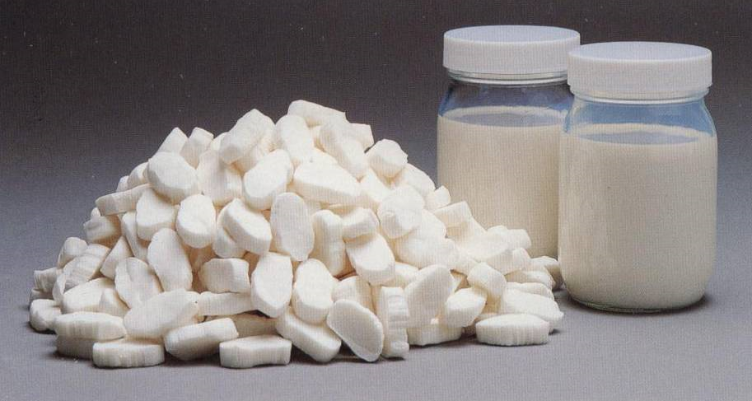
        Resonac Glycine has the same characteristic flavor as natural glycine, with more stable shape and quality.
        As it gives mild sweetness and savory taste, it can be applied to many food processing, either savory or sweet menus. Moreover, it also mellows bitterness, saltiness and sourness, so the food will be milder in taste.

        For health benefit, Glycine motivates antioxidation in food and prevent growth of microbial activity which helps prolong shelf life of the foods.

        Application

        As it gives mild sweetness than sucrose, it can be put in recipe as a sweetener. Together with savory taste, it can be applied to many food processing for both savory and sweet recipes

        Moreover, it also softens bitterness, saltiness and sourness, so the food getting milder in taste and texture, which known as “umami” taste.

        Benefits and Application

        Sweetener Glycine has a light sweet taste, with an intensity of 70% sweetness
        of Sucrose.
        Palatable Taste Glycine is contained in various foods, and relating palatability and elegant sweetness of foods respectively. There is a synergistic effect with other seasoning such as MSG, Ribonucleotides, Organic acids and their salts, resulting in increments of palatability of foods.
        Mellowing Effect Glycine shows alkaline nature against acidic substances, and acidic nature against alkaline substances resulting in a softening effect on bitterness, saltiness and sourness.
        Antioxidative Activity Glycine is stronger than other amino acids in terms of serving as a chelating agent for metallic ions. Therefore, it is effective in preventing autoxidation of foods.
        Antimicrobial activity Glycine prevent growth of Bacillus subtills and Escherichia coli, thus improving the shelf life of foods.

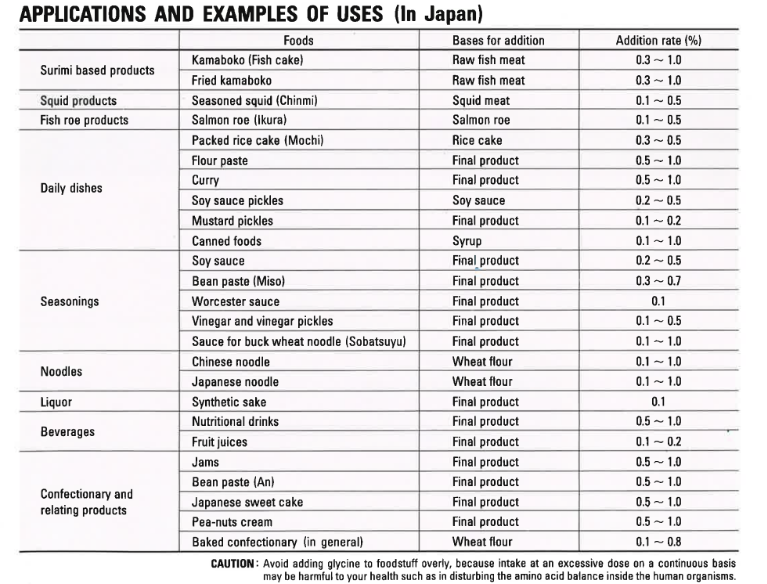
        Example of Applications and Addition Rate (Japan Recipe)

        Recipes

        Some of recipe using Glycine by Japanese food manufacturers.

        Chinese Cabbage Pickles (30kg)

        Salt 1500g
        MSG 300g
        Red Pepper 60g
        Garlic 100g
        Lactic Acid (50%) 200g
        Malic Acid 50g
        Sodium Succinate 100g
        Sesame 100g
        Konbu 100g
        Glycine 300g

        Syrup for Japanese pickles (TAKUAN) (100L)

        Mono Sodium Glutamate 300-400g
        Sodium succinate 30-50g
        Fermentive seasoning 500-800g
        Japanese liquor 300-600g
        Citric acid 300g
        Sorbitol 1,000-1,500g
        Licorice extract 20-40g
        Glycine 300-600g
        Soybean flour Suitable amount


        Pickled white radish (30kg)

        Salt 1500g
        Mono Sodium Glumate 300g
        Red Pepper 60g
        Garlic 100g
        Lactic Acid 200g
        Malic Acid 50g
        Sodium Succinate 100g
        Carrot 500g
        Sesame 100g
        Konbu 100g
        Glycine 300g

        Sake lees for pickled seafood

        Sake lees 30kg
        Sugar 2kg
        Thick malt syrup 8kg
        Salt 5kg
        Mono Sodium Glumate 300g
        Sorbic acid 50g
        Glycine 200g
        Sodium polyphosphate 100g

        Kamaboko (100kg)

        Sugar 1200g
        Salt 2800g
        Starch 8000g
        White of egg 5000g
        Sweet Sake 1L
        Cold Water 30L
        MSG 600g
        Glycine 500g
        Sodium 5′-ribonucleotide 35g
        Natural amino acid 100g

        Salted squids (Salt concentration 8%)

        Stripped squid 100kg
        Internal organ of squid 15kg
        Mixed sweetener 120g
        Mono Sodium Glutamate 500g
        Sodium Succinate 50g
        Glycine 1kg

        Squid seasoning

        Stripped squid 100kg
        Sodium5′- ribonucleotide 200g
        Natural amino acids 100g
        Sugar 1kg
        Red pepper 50g
        Glycine 200g
        Salt 100g

        Chinese noodle (Raw)

        Wheat flour 25000g
        Water 8000g
        Carbonate Water 250g
        Salt 250g
        Glycine 750g

        Konbu (Japanese seaweed boiled down in soy sauce)

        Konbu 15kg
        H.V.P.(liquid) 6L
        Water 14L
        Soy Sauce 4L
        Salt 920g
        Caramel 50g
        Sugar 2kg
        Thick malt syrup 400g
        Sweet sake 1.2L
        Mono Sodium Glutamate 100g
        Sodium 5′- ribonucleotide 6g
        Glycine 100g

        Soup powder for instant noodle

        Salt 170g
        Granulates 100g
        Mono Sodium Glutamate 40g
        Glycine 20g
        Sodium 5′-ribonucleotide 1g
        Garlic powder 7g
        Onion powder 3.5g
        Ginger powder 5g
        Pepper powder 5g
        Meat extract 3kg
        Soy sauce powder 60g
        Dried onion 20g

        Pork Sausage

        Pork meat 100kg
        Lard 25kg
        Salt 2.4kg
        Sugar 600g
        Sodium phosphate 250g
        Sodium nitrite 20g
        Sodium ascorbate 60g
        Mono Sodium Glutamate 130g
        Xylose 300g
        Glycine 600g
        Ice 31kg

        Crab stick (100kg)

        Crab stick 100kg
        Salt 2.5kg
        Starch 5-10kg
        Seasoning 2.5kg
        Glycine 0.5kg
        Crab flavor suitable amount
        Crab extract suitable amount

        Glycine Physical Properties and Specification

        Resonac Glycine Physical Properties

        Chemical Formula: NH2•CH2•COOH
        Molecular Weight: 75.07
        Appearance: White Crystalline Powder
        Melting Point (dec): 232 ~ 236ºC
        Solubility: Easily soluble in water, slightly soluble in ethanol

        Resonac Glycine Specification

        The following specification is based on the Japanese Standard of Food Additives.

        Assay: 98.5 ~ 101.5%
        State of Solution: Transparent & Colourless
        pH: 5.5 ~ 7.0
        Chloride (as CI): 0.021% max
        Heavy Metals (as Pb): 20ppm max
        Arsenic (as As2O3): 4.0ppm max
        Loss on Drying: 0.30% max
        Residue on Ignition: 0.10% max
        Check Tests (2–different types) Conforming

        For more details, please download catalog.
        Please feel free to contact us for free sample or request for COA test report.

        Packaging

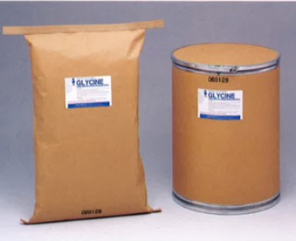
        1. 20kg Paper Bag: craft paper bag with polyethylene inner bag. Net 20kg.
        2. 50kg Fiber Drum: fiber drum with polyethylene inner bag. Net 50kg.

        For shipping, we do provide both of FCL and LCL. Please feel free to enquire.

        Contact Us

        General Enquiry

        Opening hours:
        9:00 a.m.~5:00 p.m.
        (Monday to Friday)

          Product Enquiry

          <h3>I have read the <a href='/privacy-policy' target='_blank'>privacy policy</a> and agree</h3> Lorem ipsum dolor sit amet, consectetur adipiscing elit. Etiam eu turpis molestie, dictum est a, mattis tellus. Sed dignissim, metus nec fringilla accumsan, risus sem sollicitudin lacus, ut interdum tellus elit sed risus.